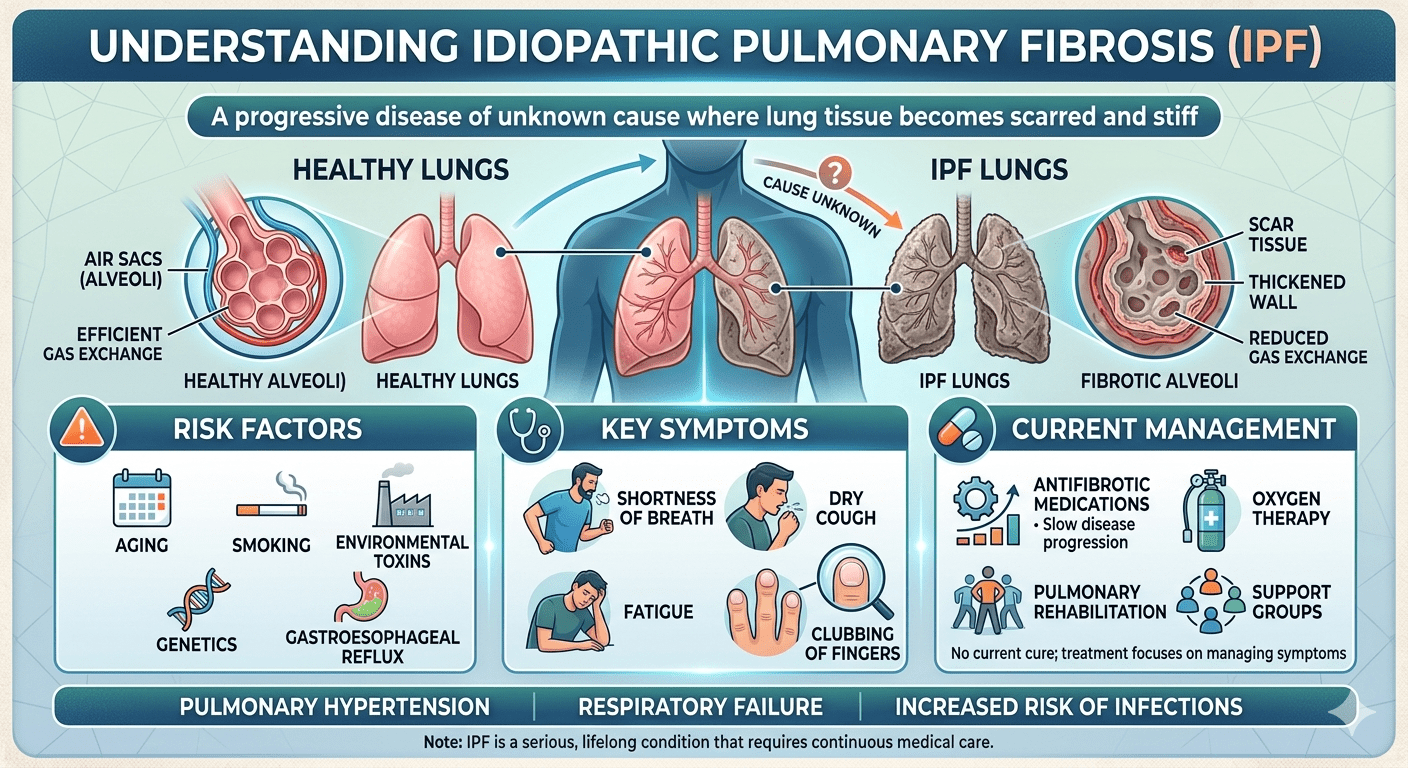
Pulmonary fibrosis (PF) is a condition where the lung tissue becomes damaged and scarred. This thickened, stiff tissue makes it more difficult for your lungs to work properly, leading to shortness of breath and a persistent cough.
As of 2026, there have been significant updates in the treatment landscape, including the first new FDA-approved medication in over a decade.
1. Understanding the Condition
Pulmonary fibrosis isn’t a single disease but a group of disorders. The most common form is Idiopathic Pulmonary Fibrosis (IPF), where “idiopathic” means the cause is unknown.
-
The Process: Think of it like internal scarring. Repetitive injury to the lung’s air sacs (alveoli) triggers an overactive repair process, leading to a buildup of collagen and stiff tissue.
-
Key Symptoms: * Shortness of breath (exertional dyspnea), often ignored as “just getting older.”
-
A dry, hacking cough that doesn’t go away.
-
Finger Clubbing: The tips of the fingers or toes may become rounded and swollen.
-
Unexplained fatigue and weight loss.
-
2. Diagnosis
Early diagnosis is critical to slowing progression. Doctors typically use:
-
High-Resolution CT (HRCT): A specialized scan that shows the “honeycombing” pattern characteristic of fibrosis.
-
Pulmonary Function Tests (PFTs): To measure how much air your lungs can hold and how well they move oxygen into the blood.
-
Biomarkers & AI: New diagnostic tools now use machine learning and blood-based biomarkers to identify fibrosis earlier, sometimes avoiding the need for invasive surgical biopsies.
3. Treatment Options (Updated 2026)
While there is currently no cure to reverse existing scarring, treatments focus on slowing down the process and improving quality of life.
A Major Milestone: Nerandomilast (Jascayd®)
In late 2025, the FDA approved Nerandomilast, the first new IPF treatment in over 10 years. It is a PDE4B inhibitor that targets both inflammation and fibrosis. It can be used alone or alongside older antifibrotics, providing a much-needed alternative for patients who couldn’t tolerate previous medications.
4. Lifestyle and Management
Living with PF requires a proactive approach to prevent “exacerbations” (sudden worsening of symptoms):
-
Vaccinations: Staying up to date on flu, pneumonia, and COVID-19 vaccines is vital to prevent lung infections.
-
GERD Management: Many PF patients have acid reflux, which can worsen lung scarring if stomach acid is inhaled.
-
Support Networks: The emotional toll is significant; connecting with groups like the Pulmonary Fibrosis Foundation can provide vital community support.